
OLOHUNLÁLÁRÓ: THE GRASSROOTS FORCE TAKING COMMUNITY ENGAGEMENT TO A NEW LEVEL
By Opeyemi Utility
From Community to Community, Association to Association, Building a Culture of Presence, Service and Engagement
There are different ways to participate in politics, but few approaches are as demanding as taking political engagement directly to the people.
It requires time. It requires organisation. It requires accessibility. Most importantly, it requires the willingness to leave the comfort of offices and major political gatherings and interact with people within their own communities.
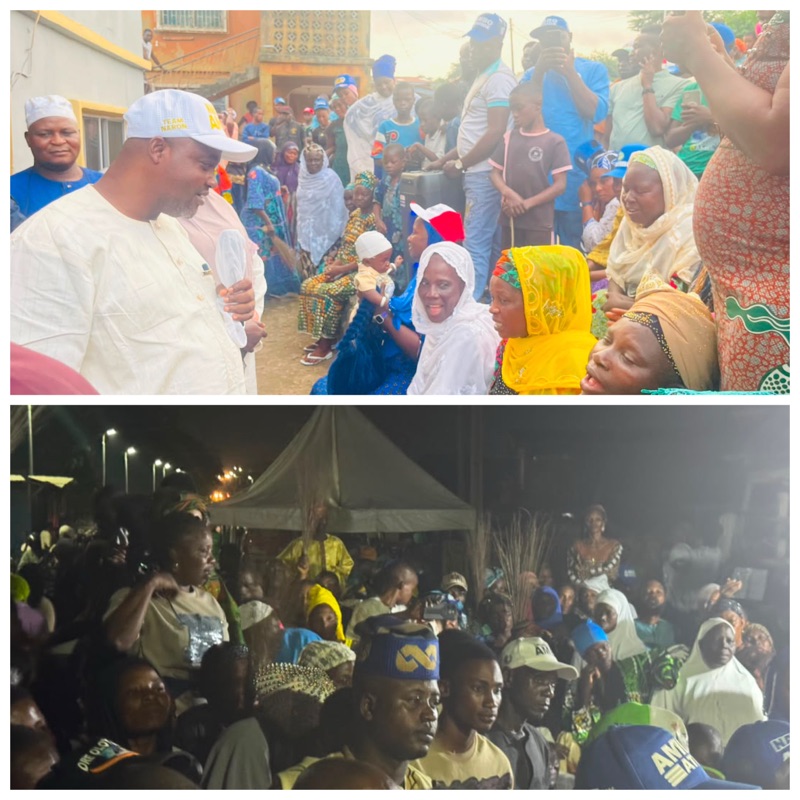
This has increasingly characterised the grassroots activities of Alhaji Abdulraheem Muhammed-Saheed Omokehinde Akofe, popularly known as Olohunláláró, whose engagements have continued to expand across Ikirun, Ifelodun and adjoining communities.
Within the broader political mobilisation for Asiwaju Munirudeen Bola Oyebamiji (AMBO) and the APC ahead of the August 15, 2026 Osun governorship election, Olohunláláró has developed a visible pattern of community-to-community engagement, bringing together political mobilisation, social interaction, empowerment initiatives and structured grassroots organisation.
TAKING POLITICS TO THE PEOPLE
The strength of any grassroots structure ultimately lies in its ability to connect with ordinary people.
Olohunláláró’s engagements have therefore extended beyond conventional political gatherings to include direct meetings with community residents, traders, artisans, transport workers, youths, women, religious stakeholders and organised associations.
Across these engagements, the emphasis has been on interaction rather than distance.
People are given opportunities to express their views, discuss their concerns and participate in conversations about the direction of their communities and the wider state.
It is this sustained contact that gives grassroots mobilisation its depth.
A NETWORK OF COMMUNITIES AND ASSOCIATIONS
One striking feature of the ongoing engagements is the diversity of the groups involved.
From market women to transport operators, from shoemakers to palm-kernel buyers, from bakers and tailors to youth groups and religious stakeholders, different segments of the local population have been brought into the engagement process.
These are not abstract categories.
They are the people who operate businesses, provide services, raise families, create employment and sustain the everyday economy of the communities.
Engaging them directly provides a clearer understanding of the opportunities and challenges confronting people at the grassroots.
EMPOWERMENT WITH A COMMUNITY DIMENSION
Another major component of Olohunláláró’s activities has been empowerment.
Reported initiatives, including financial support and interventions directed at transport operators and other grassroots beneficiaries, have added a practical dimension to the mobilisation effort.
The reported distribution of ₦50 million across polling units in Ifelodun and the Free Fuel Initiative involving thousands of transport operators have featured prominently in accounts of his activities.
Such programmes demonstrate an attempt to combine political engagement with interventions that touch everyday economic realities.
For many residents, issues such as transportation costs, access to capital, small-business sustainability and household income are not distant political questions. They are daily concerns.
YOUTH AS PARTNERS IN THE FUTURE
The youth have also remained an important part of the grassroots engagement.
Through sporting activities, community gatherings and other youth-centred programmes, Olohunláláró’s structure has continued to create avenues for young people to participate.
The AMBO Football Competition, for instance, brought young people together through sport while creating another platform for community interaction.
Beyond the political environment, youth engagement of this nature can contribute to social cohesion, talent development and stronger community relationships.
WOMEN AT THE HEART OF THE COMMUNITY
No serious grassroots structure can overlook the contribution of women.
Women remain central to commerce, family welfare, local enterprise and community development, and they have consequently remained an important part of the engagement structure.
Interactions with women entrepreneurs, market associations and organised women’s groups provide opportunities to discuss economic realities and the issues affecting families and small businesses.
The focus on women therefore forms part of a wider effort to ensure that different sections of the community have a place within the engagement process.
THE WORKING PEOPLE ARE NOT LEFT BEHIND
The artisans and informal-sector workers who keep communities moving have also featured prominently.
Engagements with shoemakers, tailors, bakers, traders, transport operators and other occupational associations have provided a direct link to the people whose livelihoods depend on daily economic activity.
Their concerns are often immediate: access to customers, cost of materials, transportation, capital, infrastructure and opportunities.
Taking time to engage these groups demonstrates an appreciation of the importance of their contribution to the local economy.
BUILDING STRUCTURE, NOT JUST CROWD
Grassroots mobilisation is not sustained by numbers alone.
Behind every successful community structure is organisation.
This is why strategic meetings involving Team Naron, Team Bibiire and other affiliated groups have placed emphasis on ward-level coordination, polling-unit structures, door-to-door engagement and communication.
The objective is to build a system in which engagement continues beyond individual events.
A rally may last for hours.
A community structure can remain active for months.
That distinction is important.
THE IMPORTANCE OF CONSISTENT PRESENCE
Olohunláláró’s activities have increasingly been defined by consistency.
One engagement leads to another.
One community leads to another.
One association opens the door to another.
The result is a continuous chain of interactions that keeps the grassroots structure visible and connected.
In political organisation, presence matters.
People are more likely to recognise structures that consistently return to their communities, listen to their concerns and maintain relationships beyond major political occasions.
A GRASSROOTS APPROACH WITH A BROADER VISION
When the different activities are viewed together, a broader picture emerges.
The engagements with communities.
The meetings with associations.
The empowerment initiatives.
The youth programmes.
The interaction with women.
The outreach to artisans and transport workers.
The meetings with religious and community stakeholders.
The ward-level organisation.
Together, they represent an attempt to create a grassroots network that is broad, structured and continuously connected to the people.
THE ROAD AHEAD
As Osun State approaches the August 15 governorship election, political activity across the state continues to intensify.
Within the IBO Federal Constituency and particularly across Ifelodun, the grassroots remains a major arena of political organisation.
Olohunláláró’s activities have established a distinctive presence within that environment, built around direct engagement, community interaction, empowerment and organisation.
Whatever the political season brings, one lesson from the ongoing mobilisation is clear:
Grassroots politics is ultimately about people.
It is about knowing the communities.
It is about understanding their concerns.
It is about building relationships.
It is about creating structures that can communicate effectively.
And it is about maintaining a presence long after the cameras have gone.
That is the space in which Olohunláláró and Team Naron have continued to operate—community by community, association by association, and engagement by engagement.
From the grassroots, the message continues to travel.
Olohunlalaro For AMBO
Ifelodun For APC


0 Comments